
[The GameDiscoverCo game discovery newsletter is written by ‘how people find your game’ expert & company founder Simon Carless, and is a regular look at how people discover and buy video games in the 2020s.]
Let’s continue with the good stuff - in this case, the good stuff being ‘more profiles of successful PC games in the year of our Gabe 2026’, since we’re starting to get the hang of specific titles that are being successful, and why. (We know about ‘most pre-ordered game in the history of both PlayStation & Xbox stores’ Grand Theft Auto VI, of course…)
Before we start, the wonderful Fabien Sanglard - who’s published a series of ‘game engine black books’ on Wolfenstein, Doom & more, has looked at how hackers unlocked the other games on the 1996 Quake shareware CD, originally gated via $ and a phone call (!). In the end: “The entire protection mechanism relies on security by obscurity.”
[NEED THE BEST DATA? You can get a free demo of our GameDiscoverCo Pro company-wide ‘Steam deep dive’ & console data, inc. MCP server, by reaching out today - >110 orgs have it. Or, signing up to GDCo Basic gets extra newsletter and Discord access, plus more.]
Game discovery news: Dreadmoor, Ebbtide, Shrek!
Let’s start things out with various game platform & discovery news, rolling up like this:
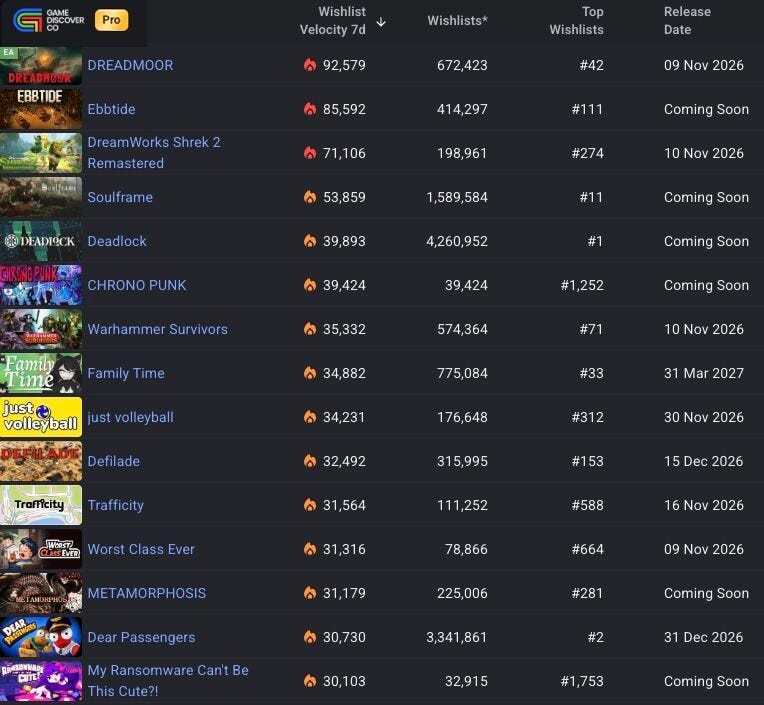
GDCo’s latest trending unreleased Steam games by wishlist increases, as of yesterday? Just-debuting creepy fishing adventure Dreadmoor hit #1, giga-zombie survival title Ebbtide is at #2, but #3 is maybe the most surprising - a remaster of the 2024 Shrek 2 game?! (But there's an awful lot of Shrek nostalgia out there.)
Elsewhere, upcoming F2P titles Soulframe (#4) & Deadlock (#5) have good interest, and #6 is new co-op action roguelite Chrono Punk. And Warhammer Survivors (#7) is another title, like Dreadmoor, due for release this week. (Special shout-out to My Ransomware Can't Be This Cute?! at #15 based on name alone.)
PlayStation things: the official PlayStation.com pages for Ghost of Yotei and Until Dawn 2 now include ‘PlayStation Exclusive’ logos; a new Japan-only PlayStation Portal handheld is launching Dec. 10th and includes internal storage, new for PS Portal. (‘Future functionality’ is apparently being teased here.)
A note if you look at Steam bundle discounts a lot: Valve made a change related to UX on multi-game/DLC bundles that also have apps within it on sale to show ‘total discount’. Basically: it no longer shows a wrongly small % off (can be as low as 1% or 2%) in those circumstances. (This is a UX change & the price isn’t changing.)
Here’s some more behind-the-scenes analysis on that hit Drawquarium trailer: notable points? ‘Rethinking pacing’ - the trailer doesn’t hit you over the head with the hook, and has done great. And timing Steam personalized calendar adding to just after Next Fest. (160k+ wishlists say they can’t be too wrong…)
AI things: Roblox Build (AI)-made games hold about 1 in 380,000 of the people playing; Sulka Haro did a big update of his ‘Steam x AI’ data dump; Nexus Mods is adding public explanations to ‘AI-assisted’ tags; World Of Warcraft data analysis & add-ons are getting incredibly AI-pilled: “Today, 10,000 developers are using our API and 1,000 are being abusive.”
Valve is really trying not to collect extra data from Australian users, while hewing to new R18+ game access rules, and its latest fix is: “Steam will automatically consider your account age verified if it is at least nine years old and has had a consistent email address or billing information.” (But it’s looking into more, non-invasive ways.)
Game veteran/’very online’ guy George Broussard notes “Random data brokers are contacting Unreal Engine 5 devs and paying a *lot* for source code for LLM training” - mid 6 figures cited. (We’ve heard this too across multiple game engines, with no doubt some ‘bad faith’ flippers mixed into this new tributary of the gold rush.)
‘Games as platforms’ news: wow, Fortnite’s One Piece crossover included “a super-rare item called a Pirate Token… [which] grant the team that finds them basically unfettered access to the game’s item shop” to buy anything they want. (Mm, loot boxen - after a furore, Epic disclosed drop rates, and it’s a 1:137,500 chance.)
Why don’t players like dedicated PC ‘launcher’ apps? Apart from the extra clutter and UI issues, here’s another reason: “a November 3 announcement that the PC launcher of Goddess of Victory: NIKKE showed signs of being compromised by a third party.” Here’s a full run-down - remote-access backdoor & crypto stealing DLLs.
Platform microlinks: Epic Games Launcher is officially coming to Steam Deck; Xbox Cloud Gaming is getting a phone controller and new direct Wi-Fi connectivity for the Xbox Nano ; the Steam Awards 10th anniversary opens Nov. 23rd for player voting; Xbox Game Pass additions inc. Escape Academy 2, Warhammer Survivors.
OUR SPONSOR: player.gg, The Fastest Growing Player Network
player.gg is the fastest growing player network in games: 200K+ real players, actively looking for their next playtest. List yours and let the right ones sign up where they already hang out.
Every signup lands straight in your FirstLook pipeline, with profiles and playtime ready to go. Bundled free with every FirstLook account. 2,000+ studios already use it, from solo indies to AAA teams.
Eden (our CEO) will demo it himself. GDCo subscribers: 30-day free Pro trial, worth $1,599.
Is Crack the future of smaller PC game success?
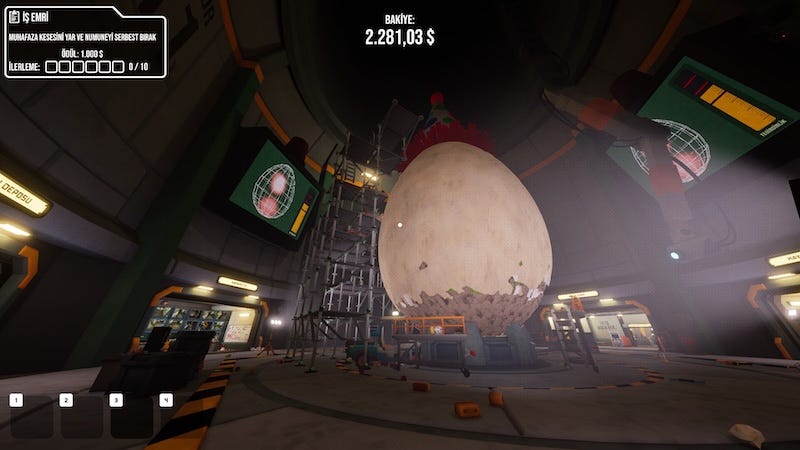
So, we’ve been following a witty co-op incremental game called Crack for a few days, now. The premise is simple? “Why is there a giant egg in this lab? Your job is simple: crack it open. Don't ask questions.” Your blobby companions are thrown all kinds of curveballs along the way - multiple shell layers, equipment upgrades, surprises & more.
The title topped out at 8,500 concurrents on Steam, and is just outside the Top 100 on Twitch in the last 30 days, with >1.2 million hours watched (!) & organic shortform video interest. Streamers like CaRtOoNz had popular multi-part series playing the game, and GDCo estimates the game at >250k sold and >$1.5m in gross $ LTD.
In chatting to its creator Rafoli (a GDCo newsletter reader!), we thought this Top 15 Steam ‘new game’ seller in October deserved highlighting as an example of what’s to come. Why so? Let’s explain:
This is essentially* a solo dev project, made in just 9 months: 100% handcoded by Rafoli, who has “shipped multiple games before, although I decided to start under a new name for this particular project”, there was external help on the music & also marketing (via Playmakers.co), but the game was basically made by one person.
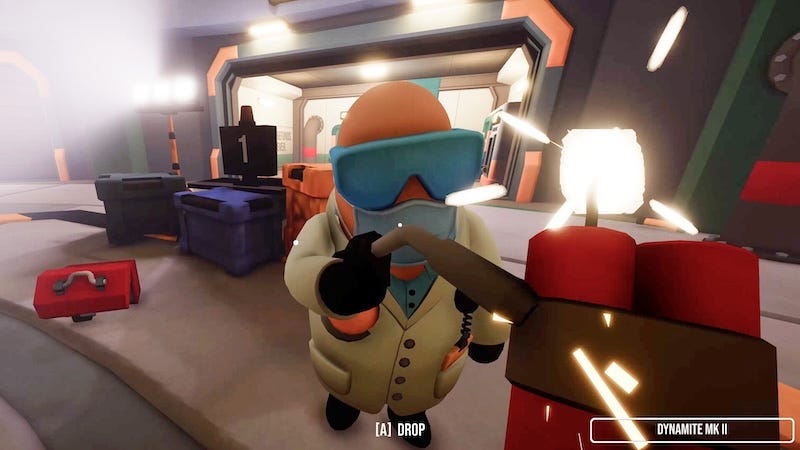
It’s designed for finite playtime but strong, entertaining game loop: the $8 game ends when you crack open the egg. But there’s a lot of fun with friends ‘meta’ before you get there - little in-game toys like a basketball hoop & whiteboards, unexpected tasks, and underneath, the ‘work harder to upgrade tools’ game loop.
Crack pushes back against the stereotype that games like this are sloppily made: if you look at Rafoli’s Instagram videos about the making of the game, you’ll see videos on making the shop UI interface that are lovingly handcrafted with an eye for chaos. (There’s no AI use here or even asset packs - I did ask.)
For me, the success of Crack - which may eventually gross $4-$5m - is interesting precisely because it appears to be made by a skilled (if pseudonymous) veteran dev. The reason we feel like it’s the future? It’s a cheaper, “relatively small-scope game, but one where a lot of attention went into making the mechanics very polished”, per Rafoli, who adds: “What looks like overnight success is very often not overnight success.”
On the demand side, it’s becoming increasingly clear that there’s a mass of gamers who want $7-12 ‘scenarios’ to play through on Steam with friends, not $40-$60 ‘all-encompassing life tasks in game form’. These games work particularly well if devs understand and encourage the social interplay that make these scenarios fun/funny…
So absolutely, there’s still validity in making a giant AAA game, or a super-complex strategy title, or a niche single-player game (hi, Horses Of Hoofprint Bay.). But this snack-sized, propulsive co-op/incremental submarket is one of the most dynamic, and we’re still learning about what powers it. (We have player survey results on this soon.)
We do run into near-existential ‘low barrier to entry’ questions here - there are a near-infinite number of solo devs who can devote 9 months to making a game like this. But, given it’s the idea (and the execution!) that worked here, we asked Rafoli how he devised & built out Crack’s scenario. Here’s the takeaways:
The initial idea of the game was based around co-op lab experiments: Rafoli tells us: “I wanted players to run random/weird experiments in a laboratory… I realized it would be much more interesting if you were being asked to run these experiments without actually understanding them or why you needed to do them.”
The impersonal lab atmosphere leads to semi-sinister vibes: inspired by games like The Stanley Parable and TV shows like Severance, Rafoli notes: “Sometimes [Crack’s in-game lab] management is incredibly toxic, and sometimes it tries to create this overly happy, work-life-balanced environment.”
The final massive viral hook is the egg-cracking mystery: people like knowing what’s inside things! So ‘what’s in the egg?’ is the ultimate puzzle. It turns out the final reveal is not really that important in Crack. But the journey to uncover that is the real prize. *dabs eyes* As always, it’s the friends we made along the way…
Is this overly portentous analysis for what is ultimately a goofy game about cracking open an egg with your friends? Kinda. But also - this title didn’t 100% randomly become a hit. It has some things it did very right. And if we can’t get to the bottom of that, what’s the point in doing any success analysis at all?
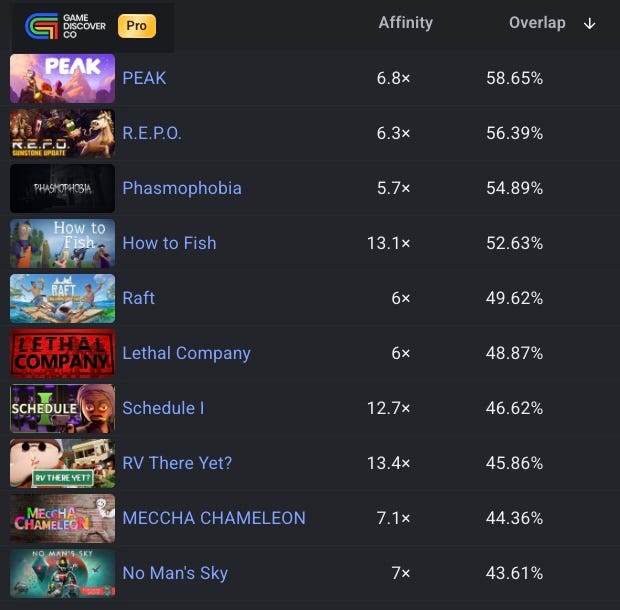
Anyhow, before we go, some supporting data from GameDiscoverCo Pro. Firstly, ‘top games that Crack owners play on Steam they’re >5x more likely to have tried than the average Steam player’ - and there’s a lot of crew-like games in this list:
We’re estimating playtime at just under 4 hours median/average, close to ‘normal’ completion time, implying high finishing rates. And it’s fairly diverse regionally, with 28% U.S. owners, followed by Germany, Russian Federation, UK, Canada, Turkey, France, then China.
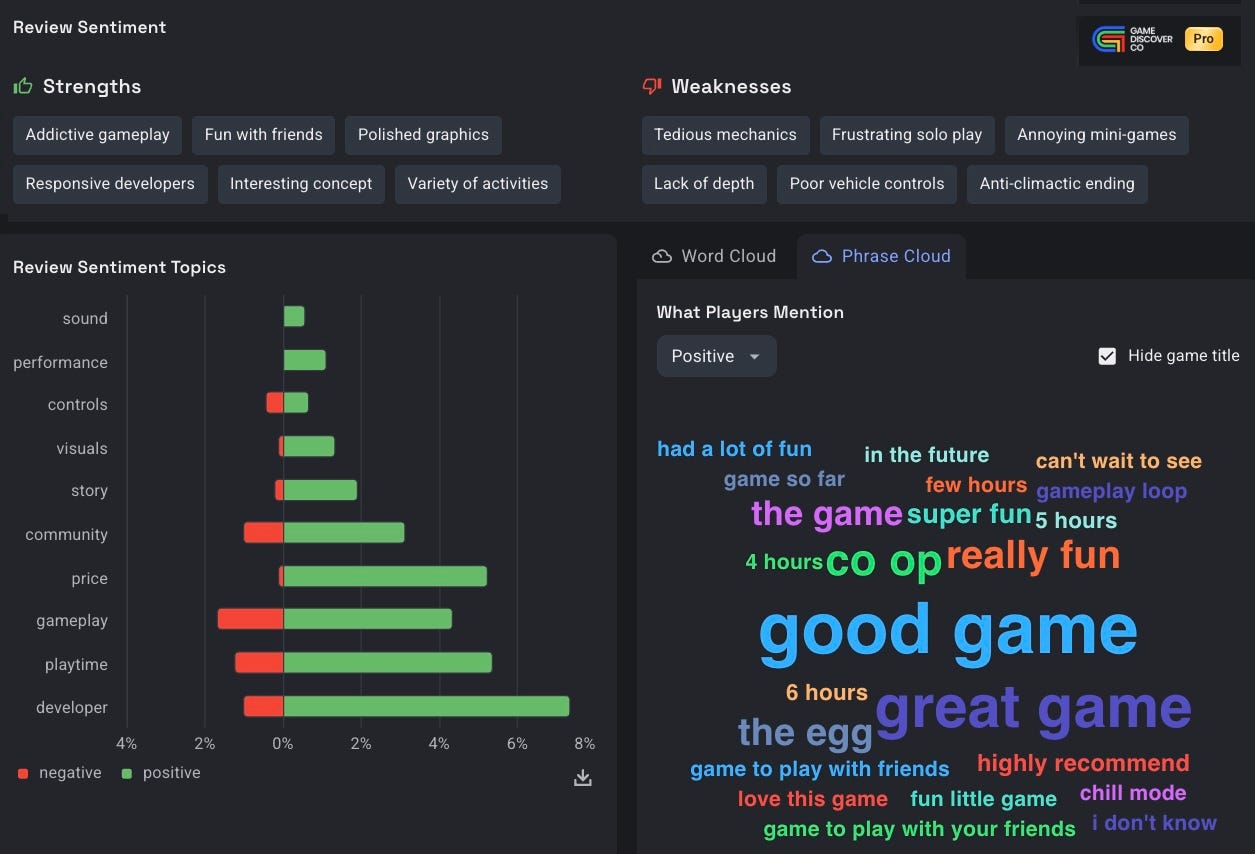
Oh, and to end, here’s GDCo’s Steam player review sentiment analysis (below). Please note that the listed weaknesses are a fraction of the overall comments, as can be seen by the lower % of red in the ‘sentiment topics’ section, particularly for price:
GameDisco Show: best way to avoid game clones?
It’s here again - the newest GameDiscover Show, ft. myself (Simon) and Post Games’ Chris Plante talking trends. Reminder: sub to the podcast via Apple Podcasts, Spotify & elsewhere (audio), with a video version on YouTube (above).
The latest GDCo Show talks about Valve's comments about avoiding devs copying your game on Steam quite so easily, Meta's minimization of the Quest hardware line-up in their newest financials, Steam's changing of how third-party sales are shown on game details pages, and the latest financials from PlayStation and Nintendo.
[We’re GameDiscoverCo, an analysis firm based around one simple issue: how do players find, buy and enjoy your PC or console game? We run the newsletter you’re reading, and provide real-time data services for publishers, devs, and other smart game industry folks.]