
[The GameDiscoverCo game discovery newsletter is written by ‘how people find your game’ expert & company founder Simon Carless, and is a regular look at how people discover and buy video games in the 2020s.]
It’s time to look over the kingdom of game discovery, and ferret out not one but multiple notable topics today - from hit games to Steam platform pricing changes. We’ll cover them all, because we generally do, whether you like it or not.
Before we start, we wanted to highlight the VGHF’s digitizing of talks from 1989’s Computer Game Developers Conference, particularly the publishers’ panel where the discussion of "a lot of software" being a problem starts around the 12 minute mark, from Accolade's Peter Doctorow. (Too many games! In 1989!)
[THE DEEPEST PC/CONSOLE DATA? You can get a free demo of our GameDiscoverCo Pro company-wide ‘Steam deep dive’ & console data by reaching out today - >90 orgs have it. Or, signing up to GDCo Plus gets the rest of this newsletter and Discord access, plus more.]
Game discovery news: Minecraft’s re-Dungeon-ed
Let’s kick the week off with a look at the latest game platform & discovery news, which are a bit like this:
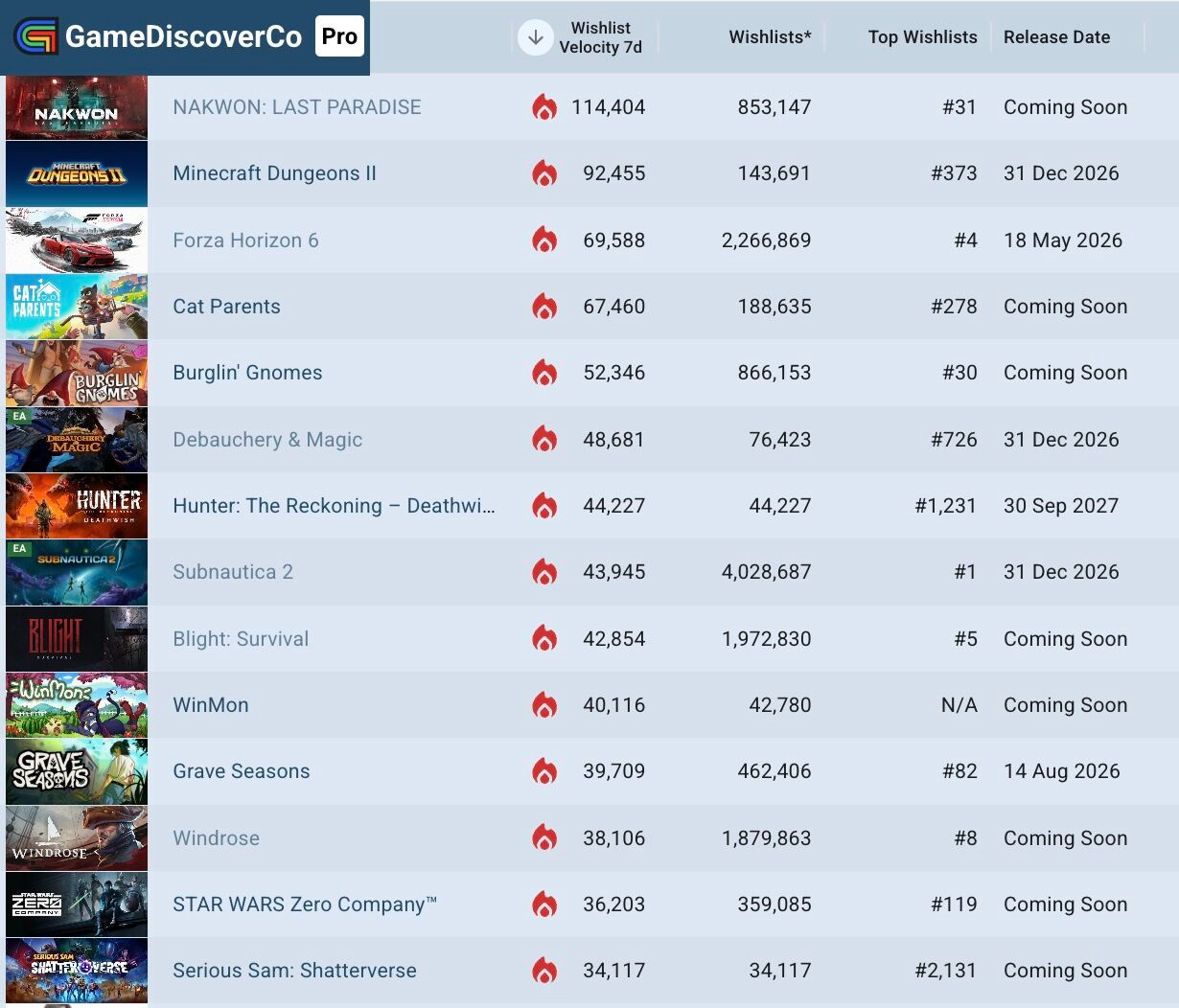
The latest unreleased trending Steam games, according to GameDiscoverCo Pro's 7-day wishlist charts (March 23rd-30th), has Korean zombie title Nakwon: Last Paradise at #1 again & Forza Horizon 6 at #3., But brand-new at #2 is Xbox's surprise announce of top-down ARPG spinoff sequel Minecraft Dungeons II.
Last week's wishlist winners Cat Parents (#4) and Burglin' Gnomes (#5) are stll performing, but other new entries include mega-indie co-op dungeon crawler Debauchery & Magic (#6), newly announced first-person ARPG Hunter: The Reckoning – Deathwish (#7), and desktop monster-feeder WinMon (#10).
As Thomas Reisenegger points out: “The ‘Event and Festival’ calendar from How to Market a Game got an overhaul, now includes: - event prices - tags for whether they'll likely get Steam featuring - tags for physical vs online events - can super recommend!!”
Confirmed for April 9th this year, the Triple-I Initiative Showcase is again an intriguing streaming show, promising “announcements from games like Windrose, Dead as Disco, Solarpunk, Risk of Rain 2, Far Far West & many more, PLUS new game reveals!” And it’s all shoved into 45 minutes, which we appreciate - brevity/soul/wit.
As we get into various Spring holidays, Steam hit a new CCU high again, with 42.69 million people online in the Steam client at the same time - up from 42.3m just a week or so ago. (Its in-game peak is still around 14m, though - relatively unchanged.)
June’s Xbox streaming showcases are confirmed: “Xbox Games Showcase 2026 will air on Sunday, June 7, starting at 10am Pacific / 1pm Eastern / 6pm UK time. It will be followed immediately by a deep-dive into the return of one of Xbox’s most legendary franchises in the form of Gears of War: E-Day Direct.”
Polygon’s Oli Welsh has an op-ed trying to define ‘outsider AAA studios’ - companies making high-grossing games like Cyberpunk 2077, STALKER 2, or even Stellar Blade from outside the trad publisher or geographic structure, suggesting different cultures can “reinterpret the most mass-market of genres in a distinct, culturally textured way.”
Here’s an interesting micro-postmortem of Steam game Duskpunk, “a gritty dice-driven RPG in a steampunk city.” It’s “sold about 1,500 units since launch four weeks ago. It’s got 17,000 wishlists and a 91% positive rating on Steam. It cost about €100,000 to make, but I got a grant from the Vienna Business Agency for about €66,000. That means it needs to sell about 4,500 units to break even.”
Xbox things: there’s a beta Game Pass tier only listing first-party Xbox games, making leakers wonder whether there’s a new GP plan under eval; Xbox explains that new CEO Asha Sharma “retired [the ‘This is an Xbox’ campaign] because it didn’t feel like Xbox… she is personally leading a reset of how we show up as a brand.”
The high-end of AAA(A) game dev sure is expensive, still - Bloomberg’s Jason Schreier notes: “The numbers I’ve heard floating around AAA game dev these days are $300 million or more - sometimes much more! - which I think helps explain the current state of the industry.” That’s U.S./Canada games, largely dev salaries/overhead.
OUR SPONSOR: FirstLook.gg - Stop renting your audience. Own the relationship.

Every campaign you run builds someone else’s community, keeping you at the mercy of the algorithms. FirstLook lets you own the relationship, the player data, and the audience you worked hard to reach.
See exactly who’s wishlisting your game, engaging on socials, and talking in Discord, then track what they do in-game. FirstLook gives you one view of your entire player journey.
Turn your players into fans you know with FirstLook. Start for free today.
Be kind, (retro!)rewind: to ~200k copies in 2 weeks
At GameDiscoverCo, we track popular new games - especially those with increasing concurrents, so we’ve been keeping a close eye on ‘90s video store sim Retro Rewind: Video Store Simulator after its March 17th release. Its creators revealed 100k copies sold on March 21st - and we think it’s nearing 200k copies already, at $16-$20.
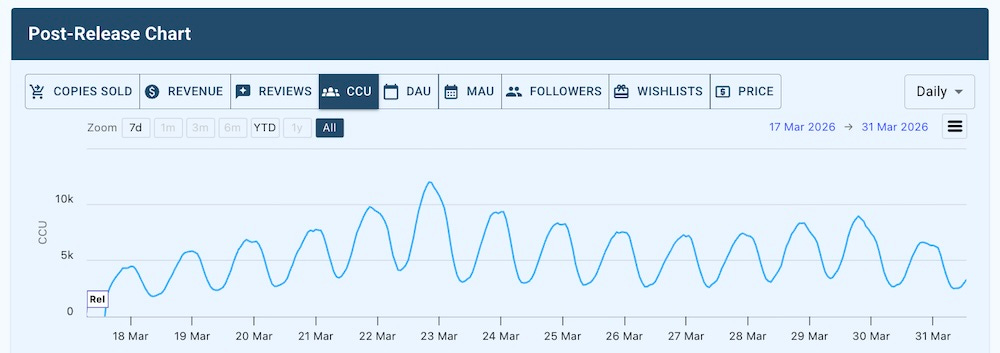
So yes, that’s good going - the two-man team at Canadian dev Blood Pact Studios must be delighted. Since they’re so busy with launch, they couldn’t respond to Qs. But luckily, the folks at 80.lv presciently got a dev Q&A with them back in December, so we have plenty to go off. Firstly, here’s the very pleasant Steam CCU curve over time:
And, with the game close to the Top 10 new sellers on Steam in March by units, we wanted to take a closer look at what made it work. We’re detecting, in particular, the following:
Smart changes to the Supermarket Simulator template: the ‘managing and expanding a store’ template led Supermarket Sim to sell ~3.5m on Steam since Feb 2024. This is similar, gameplay-loop wise, but as the devs noted: “we stay faithful to the timeline. For example, there are no credit card interactions at the checkout counter.”
It’s prime nostalgia, but not just for older people: initial data from GDCo’s Steam Fan Snapshot (more on this soon!) indicates players are skewing 3-4 years older than average. But as we saw with ‘90s web sim Hypnospace Outlaw, which also had young fans, you didn’t have to grow up then to appreciate the vibe.
Formula-led games like this with a little ‘character’ do better: now, that’s a subjective thing to say! But look at this top-rated review saying the game is ‘different’: “The fake VHS covers alone are worth the price of admission. They're all hand drawn parodies of real movies, and some of them are so good it's almost criminal.”
This particular subgenre has a pretty low initial barrier to entry, so it’s not surprising that there are multiple takes on it. Heck, the more friendslop-adjacent Rewind 99 - also retro video store themed - also came out in March. (Looks like it was a bit rough bug-wise for major scaling, though it did hit 1,100 CCU early on, which is decent.)
When we look at GDCo Pro’s Affinity data, sorted by the games with the biggest player overlap with Retro Rewind, but at least 10x more likely to be played than the average, you’ll see first-person sims in there, but not with overwhelming overlap:
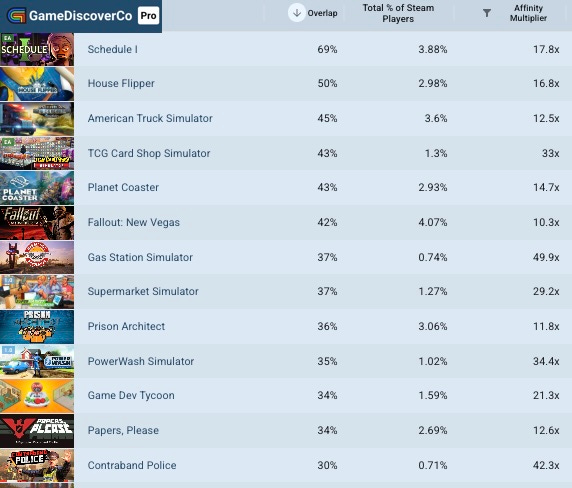
For example, >60% of the players of Retro Rewind haven’t played Supermarket Simulator. So while there’s strong ‘you might like this, if you liked this’ overlap, you’re potentially bringing this first-person shop sim gameplay to a bunch of new people.
And if you look at the 80.lv interview, it’s a strong, iterated demo which helped scale interest and hone the game, yet again:
“With Retro Rewind, the demo has been by far our most valuable tool for both visibility and feedback. Making it forced us to define the core gameplay loops early and cut out unnecessary fluff that can quickly bloat a project. Once released, it provided rapid player feedback, and many of them joined our Discord to share their experiences and suggestions.
The demo served as a marketing tool, but it also helped shape the direction of the game. Most importantly, our daily wishlist growth jumped from an average of 10 to 300! We contacted multiple YouTubers and streamers to let them know that our demo had just been released.”
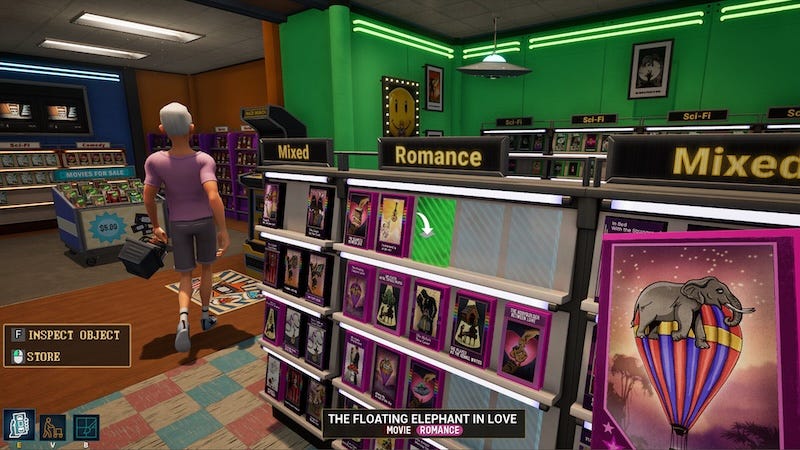
The biggest problem with Retro Rewind right now, which GDCo estimates has been played for an average of 8.5 hours on Steam (and a median of just over 4 hours)? Players running out of in-game content! Which is why the game’s roadmap now includes more storage and even stocking video games (the most-requested thing.)
What’s most notable here is, yet again, the ability of tiny teams to pull off something super-fun and competitive. The co-creator of this game is ex-Beenox (Call Of Duty co-dev) and (CG studio) Digital Dimension on the lighting/technical art side. So one presumes he was used to working as part of a massive machine.
But once again, we see people can move those AAA skills into a smaller projects using game engines (Unreal, this time!) as building blocks, with a lot of replayability and much less capital outlay. Thus, games like this are why the trad game biz is being disrupted. Why? Cos they’re low cost, pretty darn good, and very competently made.
Steam’s new regional price tips - how different?
In case you missed it, Steam announced a whole new set of regional pricing tools late last week with two major bullet points: “We’ve updated our pricing conversion data to better reflect current market conditions around the world…. [and] We’ve also added two new conversion methods to help developers choose how to price games.”
The question of pricing has been a hot topic for a while. And after we wrote a column about it last October, the folks at research outfit Hushcrasher coded a ‘better regional Steam pricing’ tool which has some similar elements to Steam’s current solution. (Which may have been developed in parallel - we not claiming causation, etcetera.)
Anyhow, the important point is that there’s now three different pricing methods that you can pick between when initially pricing your game - or deciding to change pricing later:
Exchange Rate Conversion: “This method uses a simple currency exchange rate at the time indicated on the page.”
Purchasing Power Conversion: “This method uses public data about the average purchasing power of customers within a given country and/or region.”
Multi-variable Conversion: “This method uses multiple data sources for each currency, including local purchasing power, the expected cost of comparable entertainment goods, and exchange rate (this most closely matches the method that was previously presented in the pricing tool).”
So, here’s an example with a base price of $19.99 USD. You can already see that the three methods differ a lot:
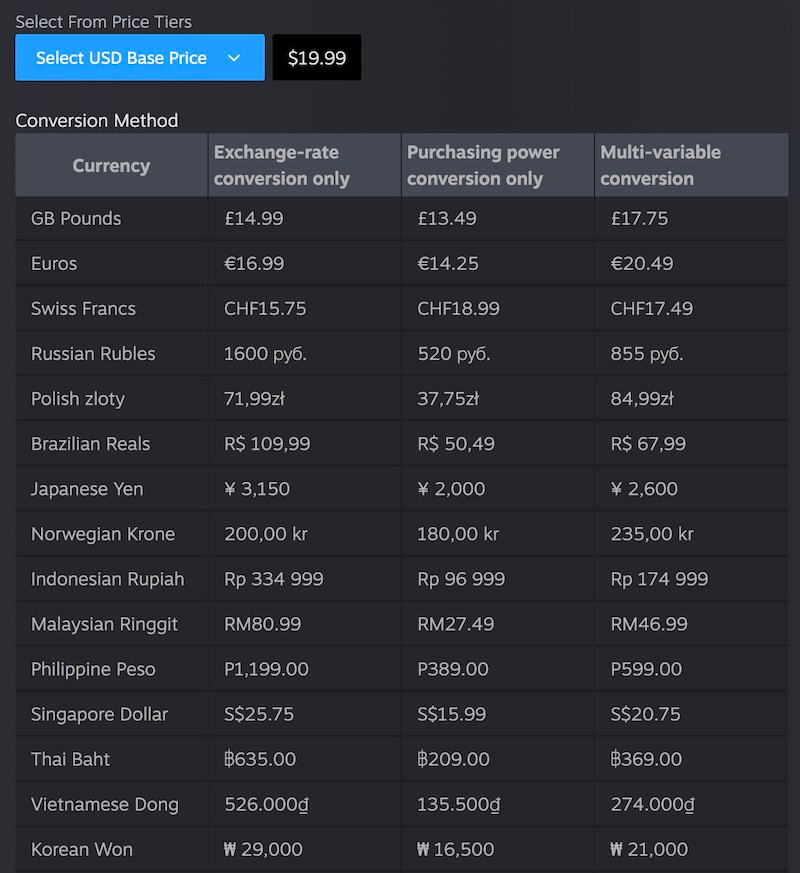
An anonymous buddy of GameDiscoverCo made us a spreadsheet comparing these to the old single-method conversion method, and we can confirm that the multi-variable conversion is closest to the previous. (For example, it was £16.75 before, and £17.75 now for multi-variable, in UKP - and Poland was 91,99zł before, and is now 84,99zł.)
So on the one hand, more choices are good! On the other hand, the choices are now very different. One r/gamedev commenter says: “[Purchasing power] seems right to me, it ‘translates’ the price into the local economy. [Multi-variable] is likely based on most of the videogame sales data in recent history, and is probably the optimal choice for profit.”
But not everyone will agree with that, and we suspect multi-variable (with tweaks!) will be the default for many devs. The folks at Hushcrasher also made a detailed spreadsheet comparing previous and new data, including some of their own ‘purchasing power’ calculations.
And, in noting that the multivariable prices are 5.7% higher than the old ones on average, Hushcrasher’s Julie & Antoine also added, for all you mega-wonks: “We really don’t understand how Steam calculated their PPP. We can’t find the data source they used: there are two main sources (World Bank and IMF), and neither matches. Steam’s PPP is lower than IMF’s PPP implied prices (-9% on average)….
The fact that multivariable prices went up despite PPP being lower… makes it harder to understand, as their… multi-variable conversion is supposed to be constructed with PPP. Maybe this increase comes from a high weight given to the ‘expected cost of comparable entertainment goods’ in their computation? Or… it may be built upon observed prices in those regions.”
Anyhow, here’s the tricky bit. If you go with multi-variable conversion, you won’t be fixing the complaints of markets like Poland and Brazil who feel like it’s all overpriced in their regions. But if you go with ‘purchasing power’ only, you may (arguably) be leaving money on the table. But hey, now you have choices, glorious choices….
[We’re GameDiscoverCo, an analysis firm based around one simple issue: how do players find, buy and enjoy your PC or console game? We run the newsletter you’re reading, and provide real-time data services for publishers, funds, and other smart game industry folks.]