[The GameDiscoverCo game discovery newsletter is written by ‘how people find your game’ expert & company founder Simon Carless, and is a regular look at how people discover and buy video games in the 2020s.]
What’s brown and sticky? A stick. These are exactly the kind of high-quality dad jokes you don’t get in other leading game biz and discovery newsletters. And all for the low, low price of free (for many of you!) OK, OK, we’re getting on with the content…
Before we start, apologies to those who tried to access Xsolla’s new white paper on selling PC games directly to players: a URL redirect issue in last Friday’s newsletter made it inaccessible. Here’s the correct link to the document, for anyone interested...
[DON’T HAVE OUR PRO DATA? You can get a free demo of our GameDiscoverCo Pro company-wide ‘Steam deep dive’ & console data, inc. MCP, by reaching out today - >110 orgs have it. Or, signing up to GDCo Plus gets extra newsletter and Discord access, plus more.]
Game discovery news: Switch 2 keeps on jammin’
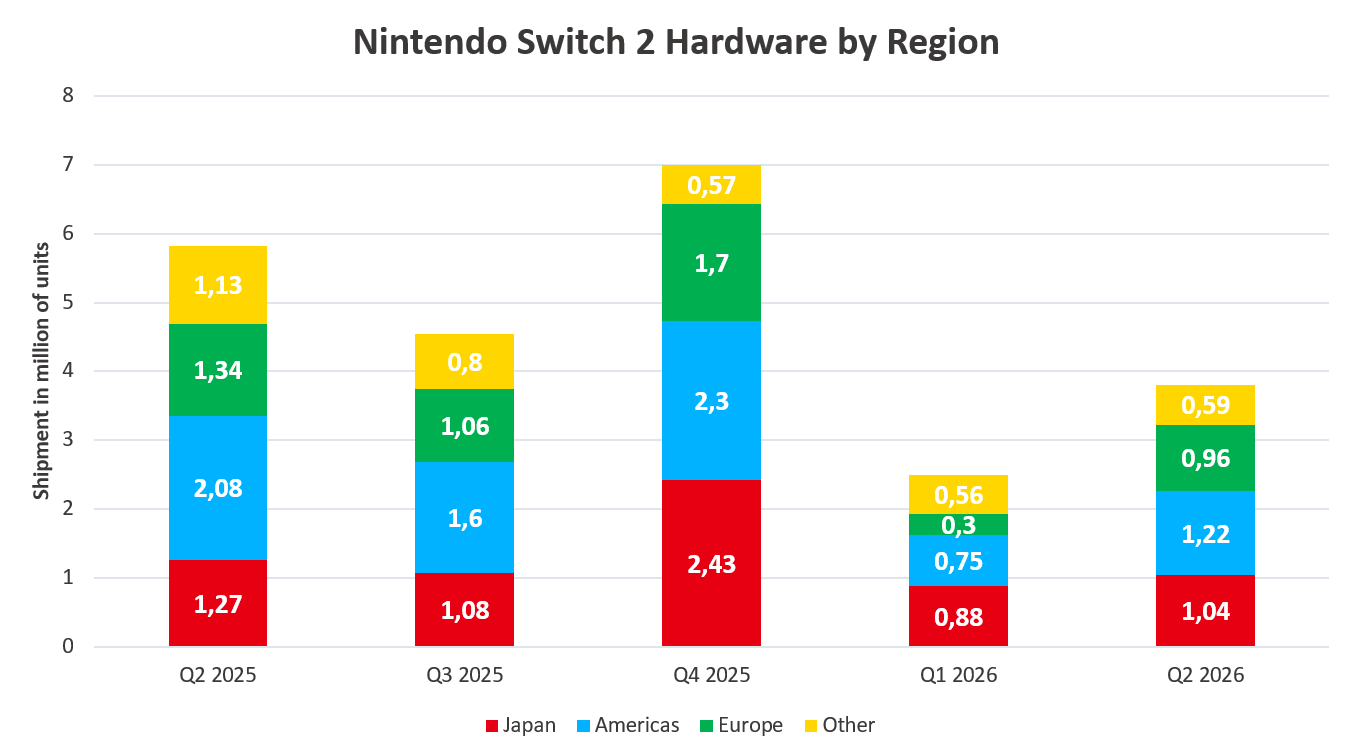
OK, let’s finish off the week with a bunch of game platform & discovery analysis, starting with Nintendo’s results:
As The Verge notes, “Nintendo has smashed its first-quarter earnings estimates… bolstered by strong games sales and [~$300m] US tariff refunds.” Switch 2 software sales were up 9.2% YoY and Switch 1 up 38.6%, but “sales for the Switch 2 console itself fell from 5.82m units to 3.82m” - tho they were up quarter on quarter (above) ahead of an upcoming Western price rise.
There’s a useful Pierre485 thread on X with detail: Tomodachi Life now at 8m shipped, and: “Nintendo distributed 33.81 million Switch games this quarter (+39% compared to 2025).” Also: “For software with a physical version, digital sales now represent 50% (new record).” Share price is +18% in the last month - but -40% YoY.
When does Steam’s Discovery Queue recommendations turn on for a game? The folks at Polden did some analysis, and reckon “a practical range of roughly 5,000 to 7,000 wishlist adds per day at the observed lower edge… aim for 6,000 to 8,000 wishlist adds per day and try to hold that pace for two or three days” to get those algo recommends.
Max Power Gaming dropped the full info on the biggest Roblox games in July, with vintage title Brookhaven topping the ‘average CCU’ charts with 546k CCU. And as they note: “Animal Hospital, Grow a Garden 2, and +1 Speed Keyboard Escape each averaged more than 350k concurrent players during July” - it’s busy out there.
Xbox’s Asha Sharma has been doing the ‘replying to fans on X’ thing again, indicating that Xbox is planning a PlayStation Platinum Trophy equivalent with Achievements. (Of course, ‘easy Platinum Achievements’ are what incented a bunch more shovelware titles onto PS4/PS5 - so you might want to avoid that bit, Xbox.)
Microlinks: changes to UGC discovery in Fortnite include more personalized recommendations; Sony is putting warning labels on PS5 packaging about decision to ditch discs; weekly ‘trad media’ mentions are headed by Beast Of Reincarnation, GTA VI and Gears Of War: E-Day.
We did our regular GDCo Pro look at trending demos for unreleased Steam games, finding titles we’ve discussed before - autobattler roguelite Guildrun (#1, 9k CCU), co-op road trip-er Nomad Drive (#2, 4.8k CCU), and multiplayer defusal puzzler Bombanana! (#3, 4.4k) still atop the demo charts.
Valve did a little ‘explainer’ for the Grip Sense feature of the Steam Controller, detailing the two capacitive touch sensors: “Our driving motivation in building these was to provide another way to activate/deactivate Gyro quickly when you’ve moved it past your comfortable zone and need to recenter it (called “ratcheting”).” Clever.
Steam 1.0 watch: survival sandbox-er Scrap Mechanic hit 38k CCU (its highest for 6 years!) at 1.0, and 3 million LTD units since 2016; cozy farm sim Fields Of Mistria just hit 27k CCU (all-time high!) at 1.0; first-person sim Waterpark Simulator (13k CCU) and action roguelite Sephiria (30k CCU) are also having super-strong 1.0s.
Windows Central put out one of its traditionally ‘wide-ranging’ exposes on Xbox’s various moves onto PC games, nixing its own mangled rumor that Xbox might withdraw games from Steam, and noting that, at least pre-Sharma, “Microsoft and Blizzard have been planning to open Battle.net up to third-party developers.”
Microlinks Pt. 2: Xbox Game Pass’ first August picks include Gears Of War: E-Day’s open beta, Date Everything! and more; the top mobile games in July include Pokemon Go (>$100m x anniversary x Scopely spending?) & Roblox; Xbox OS updates will include better achievement history, chat in ‘game captures’ & more.
OUR SPONSOR: Xsolla - selling PC games directly to players
More than 1,000 PC games already run a direct channel alongside Steam, saving developers a combined $280M in platform fees in 2025 alone. Valve’s rules allow it, the only question is how much margin you’re leaving behind.
That’s revenue that would otherwise go straight to platform fees, back in developers’ hands to reinvest, diversify, or pass on to players.
Our new guide breaks down exactly how to set up a direct channel of your own.
Download the free ebook and see what a hybrid Steam + direct strategy actually looks like.
Game discovery lessons from 30 years (!) in-biz…
We’ve been dangerously data-heavy for the past few GDCo newsletters, so let’s end the week on a different angle. Because this month, give or take, is my 30th anniversary in the game biz, having started in Aug/Sept 1996 as a game designer at Simis/Kuju (hi, Ian & Jon!) in my native UK.
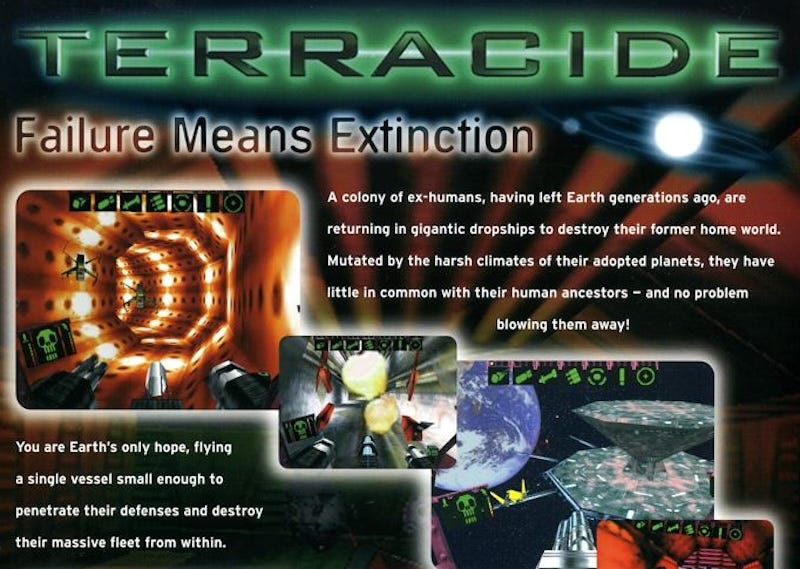
My first shipped title was 1997’s Terracide (above), a Descent-style 3D corridor shooter for PC which was an early ‘accelerated 3D graphics’ pioneer mainly known for being a tech showcase. (There was good $ made from bundling it with PC graphics cards. Sadly, I failed to pick up on the hint and buy hella Nvidia shares in 1999.)
Anyhow, I’m hardly a Mark Cerny-level veteran, but I’ve… seen things. So we’re going divide things into epochs (inadvisably themed around real eras of dinosaurs.) Then we’ll talk about how the game biz has changed during those three epochs:
Epoch 1: The Triassic ‘forming’
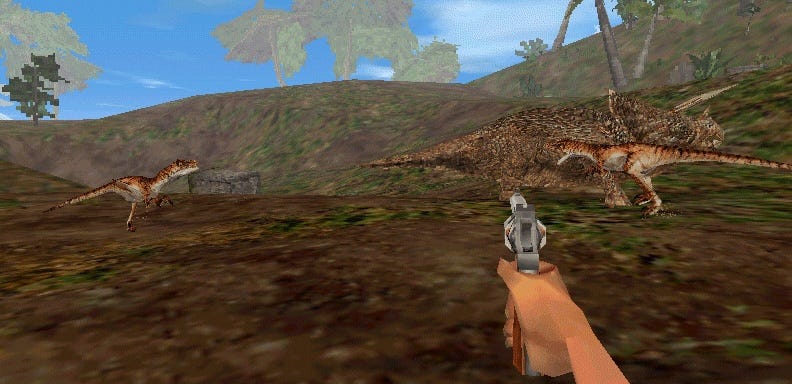
- Access to tools: low.
- Direct access to audience: low.
- Market competition: low/medium.
In the ‘90s, when I first started getting involved in games, some major themes evolve. Firstly, most dev tools were at the ‘blunt instrument’ level - engine licensing wasn’t a thing, and kludges abounded. (We actually made Terracide levels in a modified version of an existing flight sim toolkit the company put out. That was more than many had!)
And the other big discovery barrier was simple: physical distribution. Although PC ‘shareware’ games and BBS distribution had shown another route to market, PC & console boxes on shelves in stores was the chief distribution bottleneck. (A Steam featuring equivalent? The retail store endcap, of course.)
This also meant market competition was relatively low: MobyGames has 262 PC games released in 1995, scaling up to 1,100 in 1998, though some are freeware, etc. And the PlayStation 1 only had ~1,500 Western games over its entire life - of which I worked on two, Tank Racer & Looney Tunes Racing.
Epoch 2: The Jurassic ‘norming’
- Access to tools: medium (and increasing)
- Direct access to audience: medium (and increasing)
- Market competition: medium (and increasing!)
The middle epoch - which I got to witness after getting Superman-ed out of dev & moving to B2B media & events at Gamasutra, Game Developer magazine, GDC & the Independent Games Festival - was of tool & engine expansion and bold digital distribution experiments.
On the tools side, code and art toolkits were well established. But the rise of the licenseable engine - particularly with the initially expensive Unreal Engine (a pioneer from the late ‘90s), but later with Unity, which was explicitly announced in 2005 as “aiming to ‘democratize’ game development.”
On the distribution side, Xbox Live Arcade (starting in 2004) was a super-big deal for digital-first console distro, and Steam started distributing third-party games in 2005 - though didn’t expand more significantly until Steam Greenlight in 2012.
Of course, retail game purchases were still a big deal - especially on console, which was in a golden age. But the normalization of small XBLA/PSN downloads begat the rise of digital downloads for all. And the IGF started awarding genuine smash hits from small teams, esp. after 2010: Spelunky, FTL, Minecraft, Papers Please, and more.
It was an exciting but whipsaw-y time in games: I don’t think most of the indie devs involved realized how early to the table they were. I certainly didn’t. And since it was still the era when ‘social media’ meant friend groups, not ‘micro-targeted media for retention of your eyeballs’, focused trad media interest & less choice often meant major success for indie darlings.
Epoch 3: The Cretaceous ‘performing’
- Access to tools: sky-high.
- Direct access to audience: sky-high.
- Market competition: sky-high.
I had an inkling that game discovery might be an issue when founded this newsletter in 2019, while still VP at GDC’s parent company. But when I set up GameDiscoverCo formally in 2020, I’m not sure I envisaged the compounding effect on choice of the ‘no console reset’ era (backwards compatibility!) & decades-old Steam libraries.
You don’t need chapter and verse from me on where we are now. But for the record: it now costs $30-$100 up front to get a complete game engine (Unity) and all the basic code you need to make an FPS, Match 3 game, platformer, or whatever. That’s democratization at work (and Roblox & Fortnite is free to build in, too…)
With retail a husk of its former self, everyone has direct access to as much digital audience as they can scoop up*. (*With the caveat that social media is filter bubbles.& micro-scenes. So you’d better find some ways to smash the walls between those filter bubbles, if you don’t already have the audience - or your reach is going to suck.)
And competition: we’ve gone on about competition too much. There’s a lot of it, because of the above two points. And we don’t think that is ever changing. There’s sometimes talk of a momentum shift - and/or a single extinction event, which is ironically what ended the Cretaceous period. But no, there’s no 10km wide asteroid coming. There’s just, y’know, even more first-person shop simulators…
—
OK, we’re done here, and unfortunately, I’ve failed to winningly anecdote-alize 30 years in games. Where are the stories about seeing the Um Jammer Lammy stage show at TGS 1998, failing to stop Edmund McMillen wandering onstage to troll Andy Schatz during an IGF Awards, or attending a (non-scandalous, but very OTT) Notch mansion party at GDC? (Or ‘mm, crepes?’)
Don’t worry, those will definitely be in the memoir*. (*Which I won’t be writing, because I have a notoriously terrible long-term memory - sorry, any place I’ve been or anyone I met more than 5 years ago.) But look, I’ve enjoyed my 30 years in the biz, and thanks to everyone who helped me get this far. And GDCo will be around to help you work out WTF is going on for many years to come... (There is always something going on.)
Debuts on Steam: Big Walk, Tokon, ReStory do gud!